Organized Research Center for Imaging, Acoustics, and Perception Science
(CIAPS)
What is CIAPS?
Imaging Science, Acoustic Science, and Perception Science (IAP) are the highly interdisciplinary fields which combine aspects of science, mathematics, and engineering. Imaging Science is a unique multidisciplinary approach to solving problems using imaging systems. These problems can range from understanding the environment at both large and microscopic scales, to understanding how the human eye-brain system allows us to visually understand the world. We use imaging systems to learn about the long hidden content of ancient documents, recognize human face and fingerprints, identify manipulated pictures, and support disaster relief efforts with images from airplanes and satellites. Acoustics is the interdisciplinary science that deals with the study of all mechanical waves including vibration, sound, ultrasound, especially their generation, transmission, and reception. The perception is to study how people translate sensory impressions into a coherent and unified view of the world around them.

The mission of the CIAPS is to advance the scientific underpinnings of imaging and audioception technologies as well as increase the scientific understanding of human perception and cognitive mechanism, for applications in security, health-care, arts, robotics, environmental, and social science, etc. The center will also promote and facilitate interdisciplinary collaborations among CIAPS researchers and industry developers, leading to large-scale multidisciplinary research projects development with impacts both scientifically and economically.
Objective of CIAPS
The objective of the CISPS Center lies in three-fold:
-
Advance the scientific underpinnings of imaging and audioception technologies as well as increase the scientific understanding of human perception and cognitive mechanism, for applications in security, health-care, arts, robotics, environmental and social science, etc.
-
Promote and facilitate interdisciplinary collaboration among IAP researchers in Binghamton in both academia and industry, leading to large-scale multidisciplinary research projects development with external funding
-
Generate great impacts by translating the IAP scientific research to technology and product development with a great commercial potential for enhancing economic development opportunities in local region, New York State, as well as the nation as a whole.
News and Upcoming Events
-
07/12/2020
Projects Supported by Seed Funds
-
10/10/2019
CIAPS Lunch Meeting
-
10/15/2019
CIAPS seminar series in 2019-2020
-
03/07/2018
CIAPS seminar series in 2017-2018
· Long-term, Shared Autonomy with Augmented 360-Degree Vision for Mobile Telepresence Robotics, PIs: Shiqi Zhang (CS) and Yao Liu (CS)
· Validating the concept of label-free surgical dermatopathology via stimulated Raman imaging of fresh frozen tissues from Mohs surgery PIs: Fake Lu (BME), L. Yin (CS), external collaborator Dr. Sherrif Ibrahim (U of Rochester)
· Deep-learning Based Denoising and Registration of Brain Functional Images, PIs: Weiying Dai (CS) and L. Yin (CS)
· Landmine Detection via R-CNN Processing of UAV-based Imagery PIs: Kenneth Chiu (CS), Alex Nikulin (Geology), Tim de Smet (Geology)
· Road condition assessment using deep learning and in-situ sensing PIs: Chengbin Deng (Geography) and L. Yin (CS)
· Invited Talk:Pain and Substance Use: Research Findings, Treatment Implications, and Future Directions, Dr. Emily Zale (Department of Psychology, Binghamton University (Oct. 29, 2020, 1:00pm-2:00pm via Zoom: https://binghamton.zoom.us/my/lijunyin)
· Invited Talk: “Shapes, Reconstruction, and Deep Fakes from a Generative Perspective” by Dr. Ilke Demir, Senior Research Scientist at Intel, (Oct. 15, 2020, 12pm-1pm via Zoom: https://binghamton.zoom.us/my/lijunyin)
· Invited Talk:”A Statistical Distribution-based Deep Neuron Network Model – a new perspective on effective learning” By Dr. Jinjun Xiong, IBM T. J. Watson Research Center, Yorktown Heights, NY (Oct. 16, 2020, 1pm-2pm via Zoom: https://binghamton.zoom.us/my/lijunyin)
· Invited talk:“Designing Controlled Experiments for Data Analysis in Public Health and Policy: An Introduction”, by Dr. Hao Deng, Massachusetts General Hospital/Harvard Medical School, and John Hopkins Bloomberg School of Public Health; Date/Time: September 18, 2020 (Friday: noon-1pm) via Zoom: https://binghamton.zoom.us/my/lijunyin
· Seminar talk:”Computational modeling of human affection and its applications” By Dr. Lijun Yin (Department of Computer Science, Binghamton University (September 10, 2020, 9am-10am via Zoom)
· Upcoming Invited Talk: Dr. Rodney M. Gabel (Decker's School of Rehabilitation Sciences, Binghamton University (Date/Time: TBA)
· Upcoming Invited Talk: Dr. Michael Reale (SUNY Polytechnic Institute (Date/Time: TBA)
· Invited talk:Dynamic functional brain imaging in early diagnosis and treatment therapy, by Dr. Weiying Dai, Assistant Professor of Computer Science, Binghamton University, 12pm-1pm on Nov.7 Thursday at G11 conference room of Engineering building
· Invited talk: Multiphoton optical imaging renders rapid label-free digital pathology for cancer diagnosis, by Dr. Frank (Fa-ke) Lu, Assistant Professor of Biomedical Engineering, Binghamton University, 12pm-1pm on Nov.14 Thursday at G11 conference room of Engineering building
· Invited talk: From Multi-Robot Systems to Human-Robot Interaction and Collaboration, by Dr. Shiqi Zhang, Assistant Professor of Computer Science, Binghamton University, 12pm-1pm on Dec.5 Thursday at G11 conference room of Engineering building
· Invited talk: Designing Evolutionary Rule-based Machine Learning for Real World Applications, Prof. Keiki Takadam, The University of Electro-Communications, Tokyo, April, 2019 (Hosted by Dr. Shiqi Zhang)
· Seminar talk: Multimodal emotion analysis with EEG and videos, Xiaotian Li and Xiang Zhang, April 28, 2020 (via Zoom)
· Seminar talk: Privacy protection by portrait replacement, Zhe Ge, May 12, 2020 (via Zoom)
· Invited talk: Challenges Facing Computational Face, Dr. Laszlo A. Jeni, Carnegie Mellon University, July 2018
· Invited talk: Digital Facial Morphometry for Face Perception Research, Dr. Carl Martin Grewe, Zuse Institute Berlin, Germany, Aug. 2018
· Invited talk: Quantitative susceptibility mapping (QSM): physics, algorithm and applications, Dr. Yi Wang, Cornell University, Sept. 2018
· Invited talk: Mechanical object modeling, detection, recognition, and classification, Taichi Wada, The University of Electro-Communications, Tokyo, Japan, Oct. 2018
· Invited talk: Object Oriented Data Analysis, Dr. Steve Marron from UNC Chapel Hill, March, 2018 (co-organized with Data Science TWG)
· Invited talk: Integrating Prior Knowledge and Data for Efficient Visual Learning, Dr. Qiang Ji, Rensselaer Polytechic Institute, Nov. 2017
Faculty Team

Lijun Yin
Professor, Director of Organized Research Center for Imaging, Acoustics, and Perception Science
Department of Computer ScienceThomas J. Watson School of Engineering and Applied Science
Computer vision & graphics, HCI, biometrics
607-777-5484
lijun@cs.binghamton.edu

Scott Craver
Associate Professor and Undergraduate Director
Department of Electrical and Computer EngineeringThomas J. Watson School of Engineering and Applied Science
Information security, Cryptology, Steganography, Watermarking and DRM systems
607-777-7238
scraver@binghamton.edu

Ronald Miles
SUNY Distinguished Professor
Department of Mechanical EngineeringThomas J. Watson School of Engineering and Applied Science
Acoustics, micro-acoustic sensor, vibrations.
607-777-4038
miles@binghamton.edu

Peter C. Gerhardstrin
Professor and Cognitive and Brain Science Coordinator
Department of PsychologyHarper College of Arts and Science
Visual perception and cognition
607-777-4387
gerhard@binghamton.edu

Zhongfei (Mark) Zhang
Professor
Department of Computer ScienceThomas J. Watson School of Engineering and Applied Science
Multimedia and image data learning & retrieval
607-777-2935
zhongfei@cs.binghamton.edu

Jessica Fridrich
Distinguished Professor
Department of Electrical and Computer EngineeringThomas J. Watson School of Engineering and Applied Science
Steganography and steganalysis
607-777-6177
fridrich@binghamton.edu

Carl P. Lipo
Professor, Director of Environmental Studies; Associate Dean for Reasearch and Programs
Department of AnthropologyHarper College of Arts and Science
Remote sensing and thermal imagery for study of archaeological record
607-777-4306
clipo@binghamton.edu
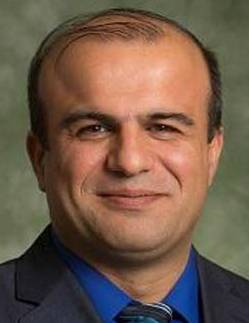
Mohammad T. Khasawneh
Professor and Department Chair
Department of Systems Science & Industrial EngineeringThomas J. Watson School of Engineering and Applied Science
Digital human modeling in manufacturing and healthcare
607-777-4408
mkhasawn@binghamton.edu

Xingye Qiao
Associate Professor, Director of Undergraduate Studies
Department of Mathematical SciencesHarper College of Arts and Science
Statistical machine learning and pattern recognition
607-777-2593
qiao@math.binghamton.edu

Kenneth Chiu
Associate Professor
Department of Computer ScienceThomas J. Watson School of Engineering and Applied Science
High-performance computing, Big data, Bioinformatics
607-777-7320
kchiu@cs.binghamton.edu

Lei Yu
Associate Professor
Department of Computer ScienceThomas J. Watson School of Engineering and Applied Science
Machine learning, Data mining, Bioformatics
607-777-6250
lyu@binghamton.edu
Chengbin Deng
Associate Professor
Department of GeographyHarper College of Arts and Science
Remote sensing image processing, spatial analysis and modeling, GIS
607-777-6791
cdeng@binghamton.edu

Fake "Frank" Lu
Assistant Professor
Department of Biomedical EngineeringThomas J. Watson School of Engineering and Applied Science
Multiphoton microscopy, Label-free digital histopathology, SRS microscopy, Dynamic imaging into the tumor microenvironment, Computer-visi
607-777-5777
fakelu@binghamton.edu

Weiying Dai
Assistant Professor
Department of Computer ScienceThomas J. Watson School of Engineering and Applied Science
Medical Image (MRI, CT, neuroimaging, Angiography)
607-777-4859
wdai@binghamton.edu
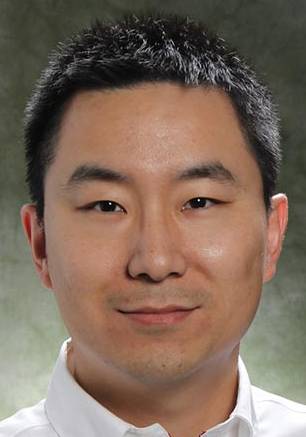
Shiqi Zhang
Assistant Professor
Department of Computer ScienceThomas J. Watson School of Engineering and Applied Science
Artificial Intelligence, Robotics, Human-robot interaction, Machine Learning
607-777-4355
zhangs@binghamton.edu

Yao Liu
Assistant Professor
Department of Computer ScienceThomas J. Watson School of Engineering and Applied Science
Power-efficient video streaming, QoE improved VR visualization
607-777-4365
yaoliu@binghamton.edu
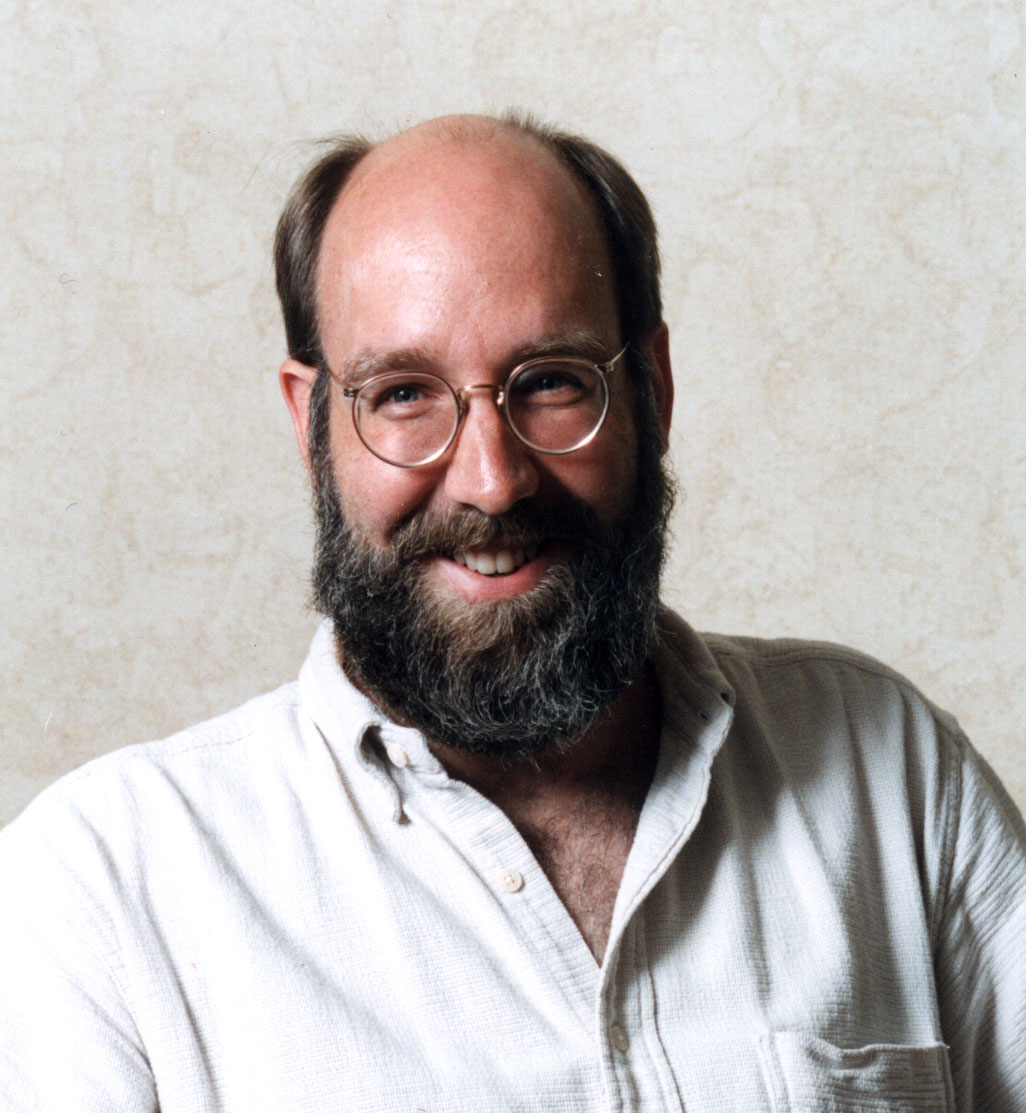
Mark Fowler
Distinguished Teaching Professor
Department of Electrical and Computer EngineeringThomas J. Watson School of Engineering and Applied Science
Image compression and signal processing
607-777-6973
mfowler@binghamton.edu

Daehan Won
Assistant Professor
Department of Systems Science & Industrial EngineeringThomas J. Watson School of Engineering and Applied Science
Large scaled data analysis via mathematical programming and algorithms
607-777-5024
dhwon@binghamton.edu

Michael Dobbins
Assistant Professor
Department of Mathematical SciencesHarper College of Arts and Science
Computational geometry and visual topology
607-777-2378
dobbins@math.binghamton.edu

Matthew C. Sanger
Assistant Professor of Anthropology
Department of AnthropologyHarper College of Arts and Science
Imaging for archaeological objects and contexts study
607-777-6739
msanger@binghamton.edu

Timothy S. de Smet
Environmental Visualization, Research Assistant Professor
Department of AnthropologyHarper College of Arts and Science
Geoarchaeology, UAV-based remote sensing, GIS Statistical and Physics Modeling
607-777-5523
tdesmet@binghamton.edu

Qiusheng Wu
Assistant Professor
Department of GeographyHarper College of Arts and Science
GIS, multispectral remote sensing, Environmental Change
607-777-3145
wqs@binghamton.edu

Jeremy Blackburn
Assistant Professor
Department of Computer ScienceThomas J. Watson School of Engineering and Applied Science
Measurements, Data science, Social media, Social network analysis
607-777-4830
jblackbu@binghamton.edu
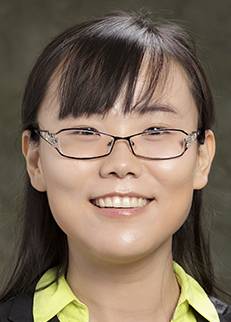
Kaiyan Yu
Assistant Professor
Department of Mechanical EngineeringThomas J. Watson School of Engineering and Applied Science
Autonomous robotic system, Nano/micro particles control and manipulation, Dynamic systems and control, Motion planning and motion control
607-777-5038
kyu@binghamton.edu

Emily L. Zale
Assistant Professor
Department of PsychologyHarper College of Arts and Science
Health Psychology and Behavioral Medicine, with an emphasis on interrelations between substance use, chronic medical conditions, and psychopathology
607-777-3381
ezale@binghamton.edu

Guifang Fu
Assistant Professor
Department of Mathematical SciencesHarper College of Arts and Science
Statistical Shape Analysis, Biostatistics, Functional Data Analysis, Mixture Models
607-777-3550
gfu@math.binghamton.edu

Andrew Horowitz
Artist In Residence
Theatre DepartmentHarper College of Arts and Science
Modern Dance
607-348-4044
ahorowi@binghamton.edu

David Schaffer
Visiting Research Professor
Institute for Justice and Well-BeingCollege of Community and Public Affairs
Theory and applications of evolutionary computations, Machine learning, Neural networks
607-777-9145
dschaffe@binghamton.edu

Rodney M. Gabel
Professor
School of Rehabilitation ScienceDecker College of Nursing and Health Sciences
Speech and Language Pathology
607-777-4680
rgabel@binghamton.edu

Michael R. Buck
Associate Professor
School of Rehabilitation SciencesDecker College of Nursing and Health Sciences
Physical Therapy
607-777-5446
mbuck@binghamton.edu

Arti Ramesh
Assistant Professor
Department of Computer ScienceThomas J. Watson School of Engineering and Applied Science
Natural Language Processing and Machine learning
607-777-4829
artir@binghamton.edu
Publications
International Conference on Computer Vision and Pattern Recognition (CVPR),2016
Emotion is expressed in multiple modalities, yet most research has considered at most one or two. This stems in part from the lack of large, diverse, well-annotated, multimodal databases with which to develop and test algorithms. We present a well-annotated, multimodal, multidimensional spontaneous emotion corpus of 140 participants. Emotion inductions were highly varied. Data were acquired from a variety of sensors of the face that included high-resolution 3D dynamic imaging, high-resolution 2D video, and thermal (infrared) sensing, and contact physiological sensors that included electrical conductivity of the skin, respiration, blood pressure, and heart rate. Facial expression was annotated for both the occurrence and intensity of facial action units from 2D video by experts in the Facial Action Coding System (FACS). The corpus further includes derived features from 3D, 2D, and IR (infrared) sensors and baseline results for facial expression and action unit detection. The entire corpus will be made available to the research community.